 comparison
How to Get a Moving Quote for Office Relocation
Table of Contents
- What Information Movers Need for an Office Moving Quote
- Understanding Office Moving Cost Breakdown
- How to Compare Moving Quotes Effectively
- Office Moving Checklist for Quote Accuracy
- Getting an Office Relocation Estimate: In-Person vs. Virtual
- Minimizing Downtime and Protecting Your Business Assets
- Frequently Asked Questions
Last Updated: October 5, 2026
What Information Movers Need for an Office Moving Quote
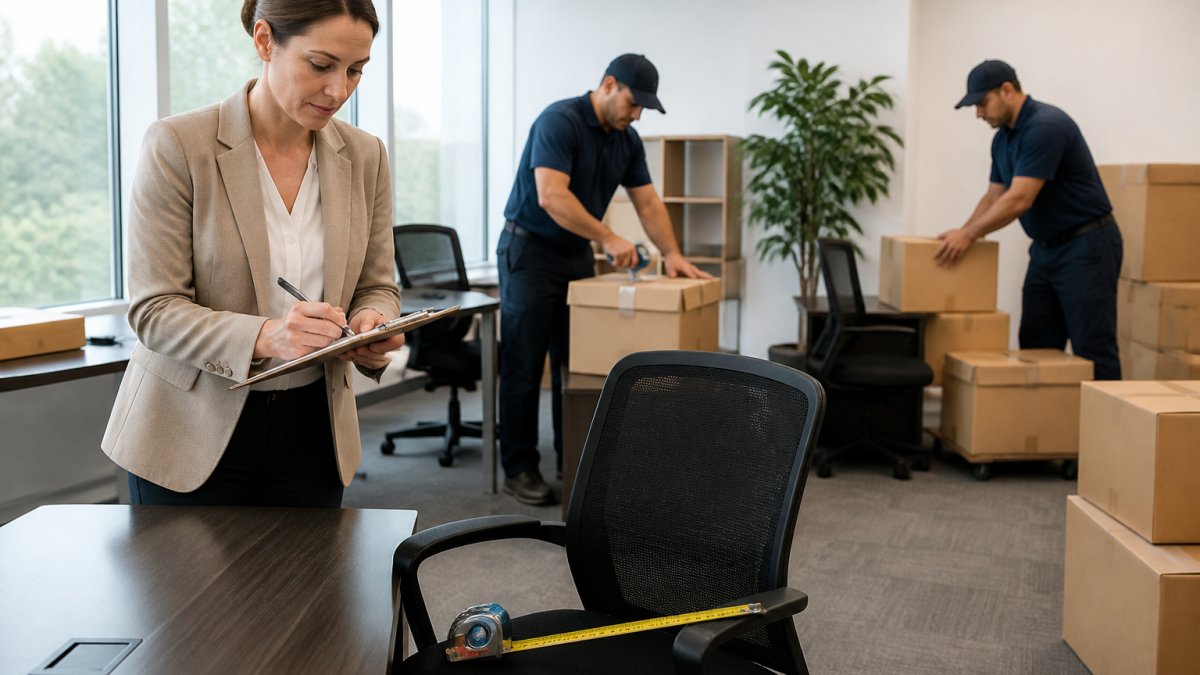
An accurate moving quote for office relocation starts with what professional movers need to assess your move: the more detailed your information, the more reliable your estimate. At Wolfe Moving, offices that provide comprehensive inventory details upfront avoid surprises on moving day.
Inventory and Volume Details
Your moving quote depends on what you're moving. Movers need an itemized list of everything leaving your current location, count actual pieces, not estimates.
Volume matters: movers measure capacity in cubic feet or meters, and a 10-person office requires different resources than a 50-person operation.
Special items require separate mention. Servers, sensitive electronics, artwork, and specialty equipment need different handling than standard furniture. Tell movers about anything fragile, valuable, or requiring climate control, this directly affects your moving quote office pricing.
Access Conditions and Move Complexity
Loading and unloading difficulty changes everything. Is your current office on the ground floor or the fifth floor? Is there a loading dock, or will movers navigate hallways and elevators?
Destination conditions matter equally. Parking restrictions, building hours, and access requirements affect scheduling and labor costs, and secure buildings requiring special access must be flagged.
Distance determines transport costs: local moves cost less than long-distance relocations, and interstate moves involve different regulations and pricing.
Understanding Office Moving Cost Breakdown
A professional moving quote should itemize costs clearly, with every charge tied to a measurable unit: labor hours, truck space, materials, access conditions, and coverage. Transparent pricing prevents hidden fees later.
Labor and Transport Rates
Labor is the largest portion of most office moving quotes, charged hourly or as a flat fee depending on scope.
Transport costs depend on distance and vehicle size: a local move using one truck costs less than a long-distance move requiring multiple vehicles or specialized equipment.
Hourly rates vary by market and experience level. A lower hourly rate can cost more overall if the crew is slower, less organized, or unfamiliar with commercial buildings.
Packing, Loading, and Specialty Services
Packing services add to your moving quote office total. Some movers include basic packing; others charge separately for materials and labor, so your office moving quote should clarify whether boxes, tape, and wrapping paper are included.
Loading and unloading labor is usually itemized separately, reflecting actual transfer time. Specialty services like piano moving, server relocation, or antique furniture handling command premium rates.
Insurance and liability protection should appear on your moving quote, specifying what's covered and any deductibles.
Access, Timing, and Surcharges That Change the Total
Access conditions drive cost more than most offices expect. A ground-floor suite with a loading dock prices differently than a fifth-floor office with a single elevator and a long hallway. Common surcharges include:
- Stair carries: charged per flight per item when elevators are unavailable or too small.
- Long carries: charged when the truck cannot park within a set distance (often 75 feet) of the door.
- Elevator or building access fees: some buildings require a certificate of insurance, a reserved elevator, or a deposit.
- After-hours and weekend rates: evening and weekend crews often bill at a premium, though the trade-off is less business disruption.
- Overtime: if the move runs past a set hour, the hourly rate can increase.
- Fuel surcharges: common on long-distance and interstate moves.
- Storage-in-transit: charged per day if your new space is not ready.
A transparent quote lets you model the total under different scenarios, weekday versus weekend, full pack versus partial pack, one truck versus two, so you can see where to save without cutting protection.
How to Compare Moving Quotes Effectively
Requesting multiple quotes is standard practice, at least three estimates to identify fair pricing and service quality differences. Comparing them requires looking beyond the bottom line.
What to Look for in Each Quote
A detailed moving quote for office relocation itemizes services, not just a total price: labor hours, vehicle charges, material costs, and specialty services listed separately.
Check whether the quote is binding or non-binding.
Verify that the quote includes everything you discussed. If you mentioned fragile items, specialty equipment, or after-hours scheduling, confirm these appear on the estimate.
Request the mover's credentials and insurance information. Ask for their DOT number if they're handling interstate moves. Check whether they're licensed and insured.
Red Flags and Hidden Fees
Quotes significantly lower than others warrant investigation, extremely cheap estimates often hide charges that appear on the final bill.
Watch for vague language like "and other charges as applicable" or "subject to change." Professional movers provide specific, detailed estimates.
Confirm whether travel time, fuel surcharges, or equipment rental fees are included.
Ask about cancellation or rescheduling fees. If your office move gets delayed, will you pay extra? Understanding these terms prevents costly surprises if your timeline shifts.
Office Moving Checklist for Quote Accuracy
Preparing for your moving quote request ensures accurate estimates. An organized checklist helps you provide movers with complete information.
- Create a detailed inventory of all items being moved, organized by room or department
- Measure doorways, hallways, and stairwells at both current and new locations
- Document any fragile, valuable, or specialty items requiring special handling
- Note building access requirements, parking restrictions, and elevator availability
- Identify your preferred moving dates and any scheduling constraints
- List any items that won't be moving (staying behind, selling, or discarding)
- Prepare floor plans of both office spaces for mover assessment
- Gather information about IT infrastructure if servers or network equipment are relocating
- Document any items requiring climate control or special protection
- Note whether you need packing materials or if you're providing your own boxes
Getting an Office Relocation Estimate: In-Person vs. Virtual
Your moving quote for office can be obtained through virtual assessment or in-person visit. Each approach has advantages and limitations.
Virtual quotes use photos, videos, and descriptions you provide, faster and more convenient, but movers can miss doorway widths, stairwell configurations, or access complications. Virtual estimates are typically non-binding because the mover hasn't seen everything firsthand.
When to Request an In-Person Assessment
Complex moves benefit from in-person visits.
In-person visits take longer but produce more reliable moving quote office estimates, and the mover can provide a binding quote if desired. For large corporate relocations or expensive equipment, the extra time is worthwhile.
Many professional movers offer both: request a virtual estimate first for a preliminary moving quote for office planning, then schedule an in-person assessment before committing to dates and final pricing.
Minimizing Downtime and Protecting Your Business Assets
Office relocation disrupts operations, so planning strategically reduces downtime and protects equipment and data. Treat the move as a business-continuity project: identify what must stay running, sequence the move around those functions, and protect the hardest-to-replace assets.
Build a Business-Continuity Plan Before You Book
Start by classifying every function into three tiers:
- Tier 1 (cannot stop): phones, email, payment processing, customer-facing systems, security.
- Tier 2 (can pause briefly): internal tools, non-urgent reporting, shared drives.
- Tier 3 (can pause for days): archives, seasonal equipment, spare furniture.
Map each tier to a move window. Tier 1 systems typically move last and come back online first, often over a weekend or overnight. Tier 3 items can move early, sometimes weeks ahead, using storage-in-transit if the new space is not ready.
Phased and Weekend Moves: Mechanics That Actually Work
A phased move splits the office into waves, often by department, floor, or function, so part of the business keeps operating while another part relocates. The mechanics matter:
- Move Tier 3 and archived items first, during business hours, using a smaller crew.
- Move Tier 2 departments on a Friday evening or Saturday, with Tier 1 systems following Saturday night into Sunday.
- Keep a "bridge" workspace at the old location with phones, network, and a few workstations until the new site is verified.
- Schedule a cutover window with your IT team and the mover so both are on site at the same time.
Weekend and after-hours moves cost more per hour but often reduce total downtime cost, which is usually the larger number. Model the trade-off explicitly: compare the premium hourly rate against the revenue or productivity lost during a weekday shutdown.
Protect IT, Records, and High-Value Equipment
Coordinate with your IT team before the move. Servers, networking equipment, and sensitive electronics require careful handling. Discuss whether your moving company has experience relocating technology infrastructure. Wolfe Moving's experience with specialty items extends to business equipment requiring precision handling and secure transport.
A practical protection checklist for business assets:
- Back up all data and verify restores before any equipment is unplugged.
- Label every cable, port, and rack unit; photograph the rack before disassembly.
- Use anti-static wrap and custom crates for servers, monitors, and medical or lab equipment.
- Keep a chain-of-custody log for laptops, drives, and any device holding regulated data.
- Move physical records in sealed, labeled containers; if records contain protected information, confirm the mover's confidentiality and liability terms.
- Document high-value items with photos and serial numbers before the move.
Insurance, Liability, and Verifying Coverage
Protect valuable assets with appropriate insurance. Verify your moving quote includes coverage for equipment and inventory, and document valuable items with photos before the move to create a record if damage occurs.
For business moves, confirm three things in writing:
- The mover's liability coverage and whether it is released-value or full-value.
- The deductible and the claims window (how long you have to report damage).
- Whether your existing commercial property or business owner's policy already covers items in transit, so you do not pay twice for the same protection.
Plan the New Space Before the Truck Arrives
Plan your office layout in advance. Have your new space ready to receive furniture and equipment. Coordinate with your moving company about unloading priorities. Getting critical items in place first helps your team resume operations faster.
A simple sequencing rule: network and power first, then Tier 1 workstations, then shared spaces, then Tier 2 and Tier 3 items.
Frequently Asked Questions
What information do movers need to provide an accurate office moving quote?
Movers need a detailed inventory of all office furniture, equipment, and supplies; the total volume or square footage being moved; pickup and destination locations with ZIP codes; building access details such as elevator availability, stairs, or narrow hallways; and your preferred move date and timeline. Providing this information upfront helps movers deliver accurate quotes without surprises. An in-person walkthrough often improves quote accuracy, especially for complex office layouts or specialty items like servers or heavy machinery.
What should I compare when reviewing office moving quotes?
Compare the scope of services included (packing, loading, transport, unloading), labor costs and hourly rates, equipment fees, insurance coverage and liability limits, and any additional charges for specialty handling or after-hours work. Check whether quotes are binding or non-binding and what circumstances might change the final cost. Verify that movers are licensed and insured. Request itemized quotes so you can see exactly what you're paying for and identify hidden fees.
How much does an office moving cost typically vary?
Office moving costs depend heavily on inventory volume, distance (local versus long-distance), access difficulty, and required services. A small office move may cost significantly less than relocating a large commercial space with heavy equipment. Pricing models vary: some movers charge hourly rates, others use flat fees based on volume. Request multiple quotes to understand the range in your area. Transparent pricing helps you avoid unexpected costs on moving day.
Should I get an in-person estimate for an office move?
Yes, an in-person estimate is recommended for office moves, especially if your space has complex layouts, multiple floors, narrow access points, or specialty equipment. A physical walkthrough allows movers to assess building access, elevator capacity, stairwell dimensions, and potential obstacles that could affect the timeline and cost. Virtual estimates work for straightforward moves with simple inventory, but they carry higher risk of quote inaccuracy. An in-person visit builds trust and reduces the chance of hidden fees on moving day.